When you drill a well and hit groundwater, the next decision can feel almost as consequential as the well itself: which submersible pump keeps clean water flowing reliably day after day. This topic sits at the intersection of hardware, water pressure, energy usage, and a little bit of field know-how earned from years spent chasing steady water in varying soil conditions. The right deep well pump can mean the difference between a quiet, dependable family faucet and a frustrating weekend of sudden drops in pressure or a well running dry during a heat wave. My own experience with submersible pumps comes from barns, rural homes, and a handful of remote cabins where reliability isn’t just convenient—it’s a necessity.
Understanding the basics helps a lot before you start sorting models. Submersible deep well pumps are designed to be lowered into the well and push water upward from below ground level. They’re sealed to resist water intrusion and are connected to a power source at the surface via a cable that carries both electricity and signals, depending on the design. A well’s depth, the lift required to reach the surface, the well casing diameter, and the pump’s flow rate all set the constraints. A shallow understanding can save you from chasing the wrong spec, but real-world conditions often tilt the decision toward specific brands, service networks, and practical field performance.
What matters most in the field is not just the label on the box but how the pump behaves under load, how easy it is to service, and how the motor holds up after years of running through hot summers and cold winters. You want a unit that can handle your daily needs without complex maintenance and with spare parts readily available nearby. That means looking for pumps with robust warranty terms, a reputable dealer network, and a track record of stable operation across a range of well conditions.

Depth, flow, and head pressure: three anchors for the selection
The first factor is how deep your well is and how much lift your pump will need to generate to reach your fixtures. Deep wells can sit well below 100 meters in some regions, but many residential wells range from 50 to 150 meters. The deeper the well, the more head pressure you require at the surface. If you underestimate lift, you’ll see a drop in water pressure during peak use or when a large appliance kicks in. The second factor is flow—how many gallons per minute (GPM) you want your pump to deliver. Typical family needs hover around 6 to 12 GPM for regular daily use, with higher numbers for homes that rely on larger irrigation setups or water features. The third factor is efficiency and durability at lift. Submersible motors are often designed to operate at a set voltage and frequency; any deviation from the intended electrical supply can shorten life or compromise efficiency. The good news is that modern deep well pumps come in models designed to optimize a balance among lift, flow, and efficiency, with warranties that reflect that balance.
In my line of work, I’ve learned to start with two practical questions before you pick a model. First, what is the smallest diameter the well casing allows for a submersible pump, and does the pump you’re considering fit that space without forcing you into a larger casing or a different well component? Second, what is the well’s yield? A well that yields 6 to 10 gallons per minute might accommodate a modest household with a modest irrigation load, but if you’re supplementing irrigation or livestock water needs, you might push toward higher flow without sacrificing reliability. It’s not always about the most GPM on the label; it’s about how that pump behaves with the pressure switch, piping, and the actual demand you place on it.
Brands and reliability stories you can lean on
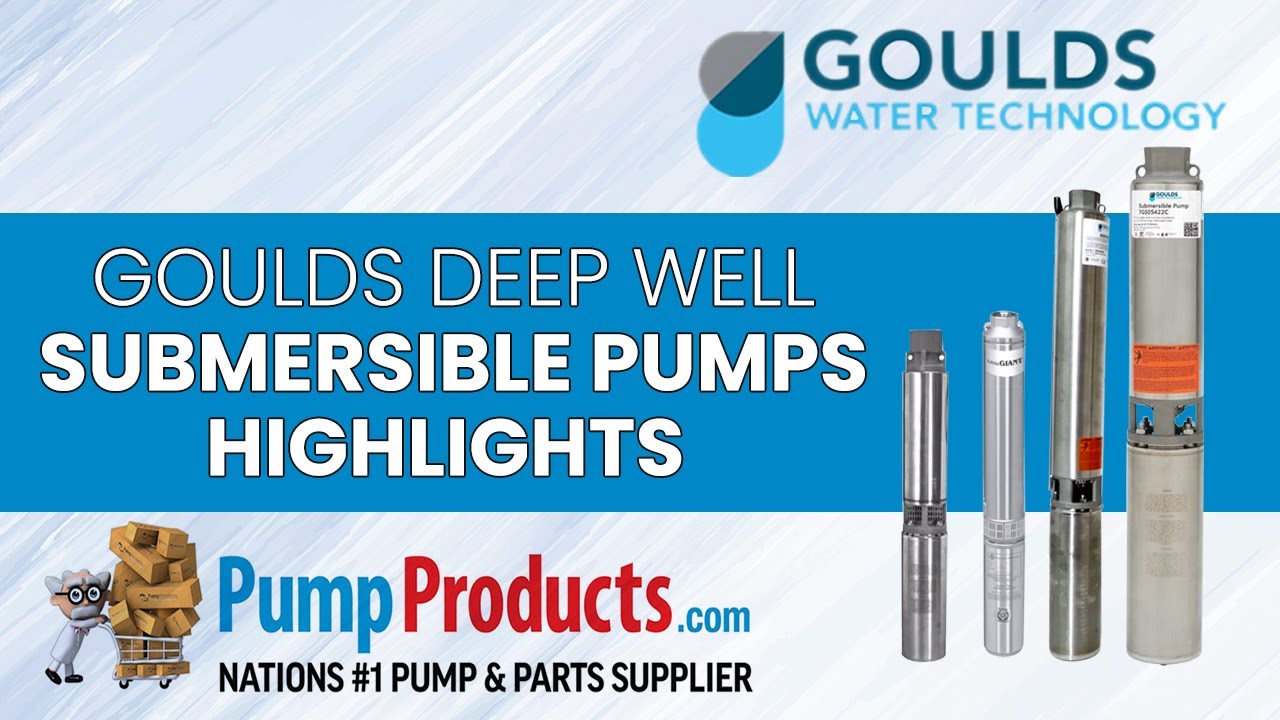
For a long time Goulds Pumps has stood as a reliable workhorse in the deep well space. Goulds deep well pumps are widely available, and their service networks are well established in many rural regions. Beyond that name, other manufacturers with strong field reputations include Franklin Electric, Grundfos, and Franklin Electric’s affiliates, which supply motors and complete pump assemblies. In some regions you’ll also find utility- or contractor-grade units from various manufacturers that deliver good service life if you stay within properly matched specifications. The key is to pair the motor and impeller design with the well’s static water level and the drawdown rate. You won’t get uniform performance just by picking the highest GPM rating on the label if the motor overheats or the impeller wears out because the well’s drawdown is insufficient to sustain that flow over time.
What to look for when you’re selecting a deep well submersible pump
- Material quality and sealing integrity: The deeper you go, the more water exposure the motor faces. Stainless steel or corrosion-resistant housings and robust seals matter. Look for double-seal protection on the motor and a robust cable gland that can handle long-term submersion and occasional abrasion from rough well interiors. Motor and thermal protection: A motor that can handle longer duty cycles without overheating will perform better in hot summer months. A pump with an integrated thermal cutout or a reliable overload protection can prevent scorching the windings during instances of high demand. Impeller design and efficiency: An efficient impeller layout translates into better performance at lower energy cost. In many cases, the difference between a good pump and a great one is a tighter tolerance on impellers, improving efficiency and reducing wear from turbulence inside the pump. Wiring and control compatibility: Check voltage requirements and make sure your power supply in the shed or utility room aligns with what the pump expects. A unit rated for 230 V single-phase may offer better efficiency than a 115 V option, but you’ll need a reliable supply and proper switching gear at the surface. Availability of parts and service: The moment you buy a submersible pump, you’re committing to a life cycle that includes bearings, seals, and possibly the motor windings. A robust supply chain for seals, gaskets, and repair kits saves you time when maintenance becomes necessary. Warranty and after-sales support: A longer warranty often correlates with a manufacturer’s confidence in its product and, in practice, the presence of a responsive support network.
Context from the field shows that the most durable installations balance an appropriately sized pump for the expected draw with a well-chosen pressure tank and a properly calibrated pressure switch. A pressure tank helps stabilize the system by absorbing surges and reducing the pump’s starting and stopping cycles. When I replaced an aging submersible unit at a mountain cabin last fall, the system had a 40-gallon pressure tank, a pressure switch set to cycle between 40 and 60 psi, and a 3/4 inch delivery line. The new pump dropped into the same footprint and delivered more consistent flow even as the nearby stream of visitors left the faucet running longer in the evenings. It was a reminder that a system-level perspective matters as much as the pump’s nominal performance.
Where to buy and how to assess availability
If you’re looking for where to buy Goulds deep well pumps or similar brands, you’ll typically find them through local plumbing wholesalers, irrigation supply stores, or large home improvement chains with a dedicated water systems department. In rural areas, a trusted irrigation dealer often keeps a range of submersible motors in stock and can help with sizing, wiring, and commissioning. The key is to work with a seller who understands your well’s depth, your electrical service, and your expected daily load. A well-run shop will ask you about your well’s static water level, about the drawdown, and about the climate in which the pump will operate. They’ll also help you verify that the installation kit includes the appropriate check valve, a proper discharge line, and bracketing that will keep the pump stable as the water level fluctuates with seasonal use.
Energy efficiency and long-term running costs
The energy footprint of a deep well pump is not negligible. A compact, efficient motor running at the right head can save a surprising amount of electricity over the life of the system. In practical terms, you may see a difference of 10 to 30 percent in annual energy consumption between models with older motor designs and those that incorporate modern efficiency improvements. It’s a real factor if your well is the primary water source and you use significant quantities for irrigation during hot months. When you compare models, factor in not only the pump’s rated GPM at a given head but also its efficiency curve across a range of heads. A pump that hits high performance at a low head might be ideal for a shallow well, while a deeper well might require a pump that maintains efficiency even as the head slowly increases during the drawdown period.
Practical considerations that aren’t on the spec sheet
- Well integrity and casing size: If your well casing is narrower than the standard 4 inches, you may need a pump designed for smaller diameters. The practical constraint is that a narrower casing often means you sacrifice some GPM, or you require a different motor configuration to maintain the same overall performance. Sediment and water quality: If your well has a higher sand content or mineral content, you’ll want to factor in a more robust filtration approach and possibly a screen that reduces the amount of sediment entering the pump. Debris-laden water can prematurely wear bearings or clog the intake, so consider pre-filtration and a more frequent maintenance schedule. Seasonal variations: In areas with heavy winter usage or periods of drought, the water table can contract significantly. A system that runs reliably in May may not perform the same in August if the drawdown is deeper and longer. The solution is often a combination of a slightly larger pump and a buffer in storage and flow.
From a practical standpoint, I’ve found that the most satisfying deep well systems tend to share a few common traits. They’re sized with a bit of headroom for occasional demand spikes, they’re wired with a clean, simple surface control plan that minimizes speculative troubleshooting, and they’re installed with an eye toward serviceability. You want equipment that your local well specialist can work with quickly, that you can reasonably troubleshoot with basic tools, and that you can schedule maintenance on without chasing down rare deep well pump installation parts in a remote town.
A note on upgrades and retrofits
If you already have a deep well pump and you’re considering an upgrade, the decision often comes down to the motor’s condition and the pump’s efficiency. A well that has delivered 8 GPM for a decade may benefit from upgrading to a similarly sized yet more efficient unit if your electrical service allows it. In some cases, you might keep the same intake and column but replace the motor and impeller with a modern, higher-efficiency design. This approach can lower your energy cost without the disruption of pulling the entire assembly from the well. Conversely, if you’re experiencing frequent overheating, a larger capacity motor with improved cooling can extend service life. The trading points here are cost, downtime, and the certainty that the upgrade is compatible with the well’s static water level and drawdown.
Two practical lists to summarize what to consider
- Top considerations when choosing a deep well pump: Match the pump’s head to the well’s lift and your required pressure. Ensure the pump fits the well casing diameter and installation space. Prioritize corrosion resistance and robust sealing. Look for reliable motor protection and thermal control. Confirm a solid parts supply chain and service network. A concise maintenance and setup checklist: Verify the well’s static water level and drawdown before selecting a pump. Confirm the pressure tank size and pressure switch settings match household demand. Inspect the discharge piping for leaks and ensure a proper check valve placement. Budget for a periodic filter and screen inspection if the water has sediment. Keep spare seals and a basic repair kit on hand for routine service tasks.
In the end, the best deep well pump for submersible installations is not simply the one with the highest GPM or the most expensive motor. It’s the pump that integrates smoothly with your well’s physical realities, your electrical supply, and your daily water needs. It’s the unit you can count on after a long season in which everyone expects good water pressure and clean, safe water from dawn to late evening. It’s the pump that, with proper sizing and a small but steady maintenance habit, will quietly stand up to the fluctuations of your local water table and keep your home’s taps flowing with confidence.
Real-world examples bring these ideas into focus. In one rural home, a 120-meter well supplied a family of four with modest irrigation needs. The homeowner opted for a mid-range submersible pump paired with a 40-gallon pressure tank and a standard 3/4 inch discharge line. The result was stable pressure between 40 and 60 psi under normal use, with occasional fluctuations during irrigation that the system absorbed without dramatic drops in water flow. In another project, a mountain cabin with a well that fluctuated seasonally benefited from a slightly larger unit and a dedicated irrigation feed. The extra headroom allowed the pump to maintain adequate GPM even when the water table fell during dry spells. These are the kinds of practical outcomes you can expect when you’re thoughtful about depth, lift, and the real needs of the property.
If you’re starting the search now, you may want to talk with a local well contractor or a trusted irrigation supplier about your well’s specifics. Bring the well depth, your average daily water usage, whether you have irrigation or livestock, and the electrical service available at the surface. The conversation will likely reveal a few options that fit your conditions and budgets. The goal is not to chase the loudest brochure on the shelf but to pair a dependable pump with a system that keeps your household, garden, and livestock reliably hydrated.
The journey from drilling to steady water flow is best walked with a measured plan and a trusted partner. With the right pump, the right tank, and a reasonable maintenance cadence, you’ll find that deep wells, when properly served, can be one of the simplest, most reliable sources of clean water you’ll manage. The kind of reliability you can rely on every day, for many years to come.